 News Journal
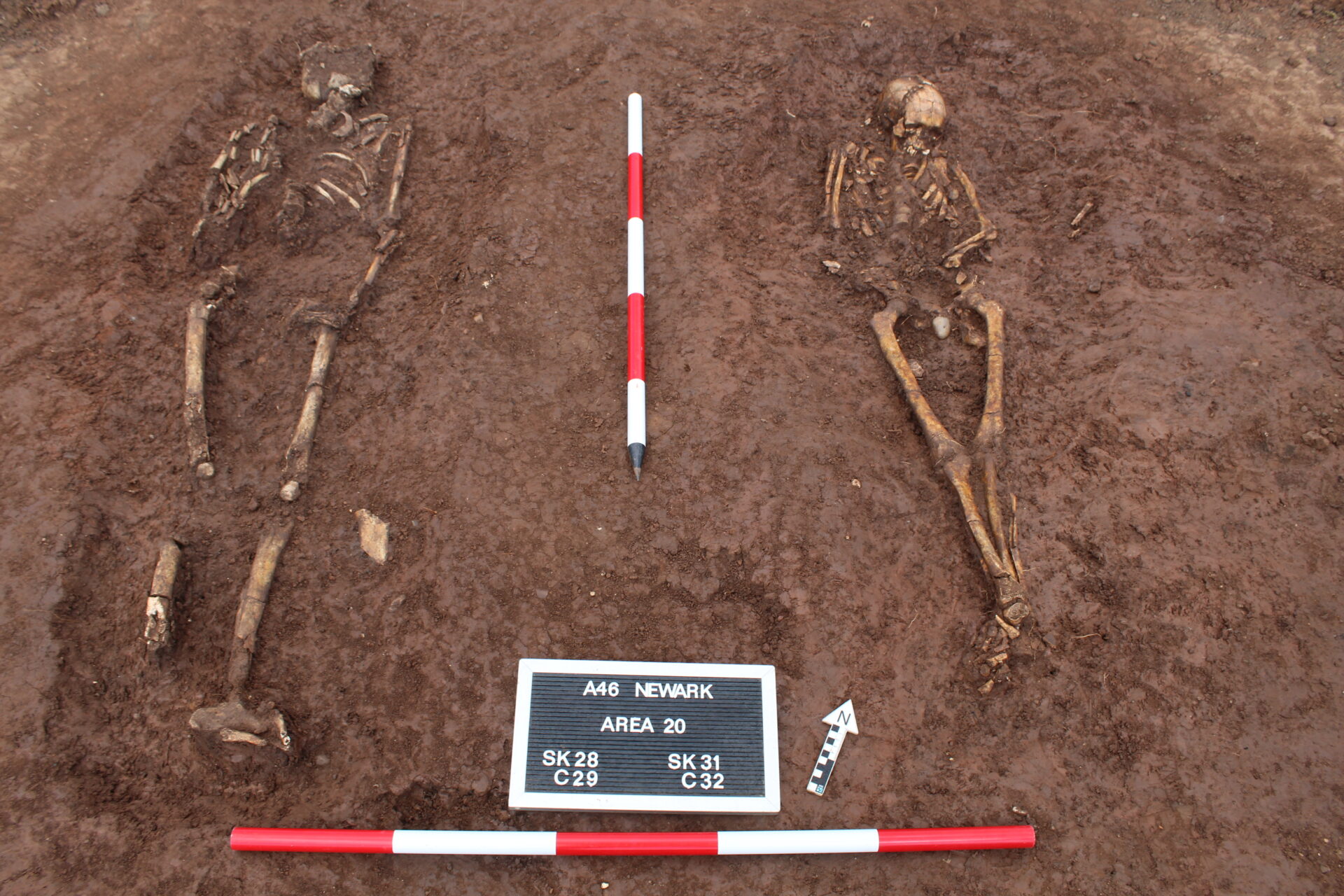
The remains of seven ancient people, a Roman, well and two probable Anglo-Saxon houses are some of the finds that have been discovered by archaeologists during early, pre-construction investigations around National Highways’ A46 Newark Bypass scheme.
The scheme, which was confirmed in the Government’s third Road Investment Strategy (RIS) in March, aims to improve congestion at key junctions along the A46 by widening sections of the carriageway, creating a flyover, and building a bridge over the A1.
A team of 30 archaeologists carefully excavated five fields in Newark last year, covering more than 23 acres ( 9.63 hectares) over 22 weeks to reveal the fascinating finds that potentially date to 6000BC.
A burial site, encompassing the remains of seven individuals, was discovered in one field close to the A46. These burials provisionally date to the Iron Age, Roman or Anglo-Saxon periods.
The remnants of an Anglo-Saxon house, known as a grubenhaus, were also found within the same area. German for a ‘sunken-floored building’, it was typical of Anglo-Saxon settlements, but is a rare find in Nottinghamshire.
In a field south-west of Kelham village, various features were discovered dating from the Mesolithic period to post-Medieval. Items included a rectangular Roman enclosure, foundations of a farmhouse, and a Roman well.
Naziya Sheikh, National Highways project manager for the A46 Newark scheme, said: “The experts have done an amazing job to uncover these important pieces of history that have unknowingly remained buried under Newark until now. We’re excited to finally be able to share the details with residents in the town and beyond as part of our early pre-construction work on the A46 scheme.
“We take great care to record and safeguard the country’s heritage that can be uncovered by our projects. Archaeology belongs to the communities we serve, and by working alongside a team of archaeologists, we are delighted to be able to conserve and protect these incredible finds for future generations.”
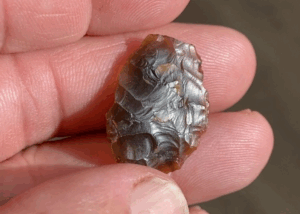
Other items discovered during the digs included 163 pieces of ceramic pottery, many of which were glazed and show clear decorations dating from Roman and Iron Age periods. Several prehistoric finds such as flint arrowheads and a saddle quern used to grind flour to make bread in the Neolithic period and items dating to the English Civil War in 1642 were also uncovered.
Sean Tiffin, of Archaeological Management Solutions (AMS), which carried out the dig on behalf of National Highways, added: “Our excavations uncovered fascinating insights into life in this corner of Nottinghamshire during the prehistoric, Roman and Anglo-Saxon periods, and even up to the present day.
“The results will greatly help increase our understanding of the rich history of the area, shedding light and new insights on previously unknown settlements.”
It is hoped some of the artefacts and findings will go on public display in Newark.
The A46 Newark Bypass scheme, which will improve a key trans-Midlands trade corridor linking to the Humber ports, will be a major project to ease congestion at crucial junctions. Work will include:
• Widening four miles of a single carriageway in both directions between the Farndon and Winthorpe roundabouts near Newark-on-Trent.
• Creating a flyover for the A46 at the Cattle Market roundabout.
• Building a new bridge over the A1.
• Enlarging the Winthorpe roundabout to connect the new link road.
The Government confirmed its commitment to this scheme in its third Road Investment Strategy (RIS3) published in March and National Highways plans to set out more information on its delivery of the scheme in the summer.